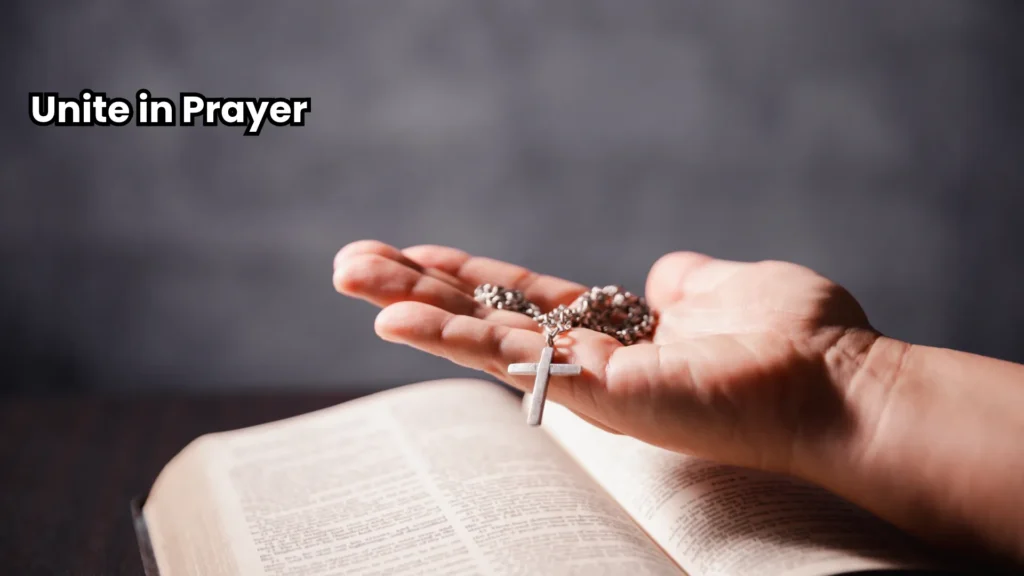
Prayer for those who have died has long held an important place in Catholic spirituality. For many believers, remembering departed family members, friends, and unknown souls in prayer is an expression of love that does not end with death. Among the devotions associated with this practice, the St. Gertrude prayer for souls has become especially well known.
Often called the Prayer of St. Gertrude the Great for the Holy Souls, this short prayer offers the Precious Blood of Jesus to the Eternal Father and asks for mercy for the souls in Purgatory, sinners throughout the world, and members of the faithful.
The prayer is also frequently connected online with a claim that praying it releases 1,000 souls from Purgatory. This has led people to search for phrases such as “prayer of St Gertrude 1 000 souls” and “prayer of St Gertrude 1000 souls.” While this tradition has encouraged many people to pray for the departed, the specific number should be understood carefully. Catholic teaching strongly encourages prayer for the dead, but it does not promise that a particular number of souls will be released every time one prayer is recited.
Understanding both the devotion and its historical context can make the prayer of St. Gertrude the Great a more meaningful part of personal prayer.
Who Was St. Gertrude the Great?
St. Gertrude the Great was a medieval Benedictine mystic whose writings became influential in Christian spirituality. Pope Benedict XVI described her as one of the most famous mystics of her period and noted the significant influence her spiritual life and thought had on Christianity.
Gertrude was born on January 6, 1256. At approximately five years old, she entered the monastery at Helfta, where she received her education and eventually spent the rest of her life. She became an accomplished student who studied the subjects traditionally taught in medieval education, including literature, music, and other areas of learning.
A major spiritual change occurred in her life in 1281. According to accounts of her spirituality, her focus increasingly shifted from secular learning toward Scripture, theology, prayer, and a deeper relationship with Christ. Her spiritual writings reflected an intense confidence in God’s mercy and a profound devotion to Jesus.
Her surviving works include The Herald of Divine Love and her Spiritual Exercises. Her writings became particularly associated with trust in God’s love, contemplation of Christ, the Sacred Heart, and concern for the salvation of souls.
This concern for souls is one reason the prayer of St Gertrude the Great became closely associated with prayers for those undergoing purification after death.
What Is the St. Gertrude Prayer for Souls?
The St. Gertrude prayer for souls is a brief intercessory prayer traditionally connected with St. Gertrude the Great. Its central act is an offering of the Precious Blood of Jesus to God the Father for the souls in Purgatory and for sinners.
One commonly circulated form of the prayer of St. Gertrude the Great reads:
Eternal Father, I offer Thee the Most Precious Blood of Thy Divine Son, Jesus, in union with the Masses said throughout the world today, for all the holy souls in Purgatory, for sinners everywhere, for sinners in the universal Church, those in my own home and within my family. Amen.
Although it is a short prayer, it expresses several important themes of Catholic spirituality: Christ’s sacrifice, the Eucharist, intercession for the dead, concern for sinners, and prayer for one’s own family.
Rather than focusing only on a particular deceased person, the prayer has a broad intention. It remembers the holy souls as well as people throughout the Church and the world who need God’s mercy.
That universal quality is part of what has made the St. Gertrude prayer for souls meaningful to many Catholics.
Why Do Catholics Pray for Souls in Purgatory?
To understand this devotion, it helps to understand the Catholic teaching on Purgatory.
The Catechism describes Purgatory as the final purification of those who die in God’s grace and friendship but who still require purification before entering the fullness of heaven. This purification is distinguished from the punishment of the damned.
The Church therefore encourages Christians to pray for the dead.
According to the Catechism, prayer for the departed has been part of Christian tradition from the beginning. The Church particularly remembers the dead in the Eucharistic sacrifice and also encourages prayers, almsgiving, indulgences, and works of penance offered on their behalf.
The idea behind these prayers is deeply connected with Christian communion. Death does not mean believers stop loving or remembering those who have gone before them.
Prayer becomes one way of entrusting the departed to God’s mercy.
The St. Gertrude prayer for souls fits naturally within this broader tradition. Its value does not depend upon a mathematical calculation. Its deeper meaning lies in asking God to apply the infinite merits of Christ’s sacrifice according to His mercy and wisdom.
Why Is the Prayer Connected With the Precious Blood of Jesus?
One of the most striking parts of the prayer is the offering of the Precious Blood of Christ.
In Christian belief, Christ’s death and Resurrection stand at the center of salvation. The prayer therefore does not present the person praying as possessing some independent power to free souls.
Instead, everything is offered through Jesus.
This is important for understanding the spirituality behind the prayer of St. Gertrude the Great. The prayer directs attention away from human achievement and toward what Christ has accomplished.
St. Gertrude’s own spirituality strongly emphasized Christ and His saving love. Pope Benedict XVI’s account of her life describes an important mystical experience in which Gertrude recognized Christ through the wounds associated with His saving Blood on the Cross.
The language of the prayer therefore corresponds closely with themes found throughout her spirituality: trust in Jesus, confidence in divine mercy, participation in the Church’s prayer, and concern for other souls.
Prayer of St. Gertrude and the 1,000 Souls Tradition
Perhaps no part of the devotion creates more interest than the phrase “Prayer of St. Gertrude 1000 souls.”
A popular tradition claims that Jesus promised St. Gertrude that 1,000 souls would be released from Purgatory whenever the prayer was said.
This claim is frequently repeated on prayer cards, devotional websites, social media posts, and religious materials. As a result, many people encounter the prayer for the first time because they hear it described as the prayer that “releases 1,000 souls from Purgatory.”
However, this claim needs qualification.
The Catholic Church certainly teaches that prayers can benefit the faithful departed, and praying for the dead is explicitly encouraged in the Catechism. But Catholic teaching does not establish a guaranteed formula under which exactly 1,000 souls must leave Purgatory every time this particular prayer is recited.
Catholic Answers similarly notes that there is no way for us to know that precisely 1,000 souls are released by each recitation. It nevertheless describes the offering associated with St. Gertrude as a powerful prayer because of its trust in the saving Blood of Christ.
Therefore, someone searching for the prayer of St Gertrude 1 000 souls can certainly use the traditional prayer devotionally, but the number should not become the main reason for praying it.
Prayer is an act of faith and love, not spiritual arithmetic.
Does the St. Gertrude Prayer Really Release 1,000 Souls?
It is more accurate to say that the 1,000 souls promise is a popular devotional tradition rather than a defined Catholic doctrine.
That distinction does not make the prayer meaningless.
Catholics can confidently pray for the souls of the departed because the Church explicitly encourages such intercession. What cannot be confidently stated is that human beings know the exact number of souls affected by a particular prayer.
Only God knows completely how prayers are applied and how His grace works in individual souls.
This understanding can actually deepen the prayer.
Instead of thinking:
“I said this prayer once, therefore exactly 1,000 souls must have been released,”
a person can pray with greater humility:
“Lord, receive this prayer and use it according to Your mercy for those who most need it.”
Such an attitude keeps the focus where the prayer itself places it—on the Precious Blood of Christ and the mercy of God.
The Meaning Behind the Prayer of St. Gertrude the Great
The prayer of St. Gertrude the Great contains several layers of spiritual meaning.
1. Offering Rather Than Demanding
The prayer begins with an offering.
It does not command God or attempt to control the outcome. Instead, the person praying offers Christ’s Precious Blood to the Eternal Father and places the intention in God’s hands.
That distinction encourages humility.
Christian prayer ultimately trusts that God understands the needs of every soul more completely than we do.
2. Remembering the Holy Souls
The prayer intentionally remembers those undergoing purification.
Many people naturally pray for recently deceased parents, grandparents, spouses, relatives, or friends. The St. Gertrude devotion expands that concern to include souls who may have no living person specifically remembering them.
It can therefore become a prayer of spiritual charity.
3. Praying for Sinners Everywhere
The prayer does not stop with Purgatory.
It also remembers sinners throughout the world.
This broadens the devotion from remembrance of the dead to concern for the living.
4. Remembering Your Own Family
The traditional form ends by remembering those within one’s home and family.
This gives the prayer a deeply personal dimension.
A person may pray for the whole Church and the whole world while also remembering the spiritual needs of those closest to them.
How to Pray the St. Gertrude Prayer for Souls
There is no need for a complicated ceremony to use the St. Gertrude prayer for souls.
It can simply be prayed reverently as part of a person’s daily prayer life.
You might begin by making the Sign of the Cross and quietly remembering the person or people for whom you wish to pray.
Then pray the traditional St. Gertrude prayer slowly.
Rather than concentrating on how many repetitions you can complete, pay attention to what the words mean.
You are entrusting souls to God.
You are remembering Christ’s sacrifice.
You are asking for mercy.
Afterward, you may conclude with an Our Father, Hail Mary, Glory Be, or a simple personal prayer such as:
“Lord, receive the souls of the faithful departed into Your mercy, and comfort everyone who mourns them.”
The prayer can also be included alongside the Rosary, personal Scripture reading, Eucharistic devotion, or other prayers for the dead.
How Many Times Should You Say the St. Gertrude Prayer?
There is no official requirement that the prayer of St. Gertrude the Great be said a specific number of times in ordinary private devotion.
Some people say it once each day.
Others repeat it several times.
Some incorporate it into their Rosary or prayers before bed.
Still others pray it whenever they remember a deceased loved one.
The important point is to avoid turning prayer into a mechanical transaction.
Repeating a prayer can be spiritually valuable when repetition helps us remain attentive to God. But simply multiplying the number of repetitions should not become more important than faith, love, and sincere intention.
The popular prayer of St Gertrude 1000 souls tradition can inspire frequent prayer, but Catholics do not need to calculate how many souls they believe they have released.
God’s mercy cannot be reduced to a numerical formula.
When Can You Pray the Prayer of St. Gertrude?
The prayer can be used at many meaningful moments.
You may pray it:
- After learning that someone has died
- On the anniversary of a loved one’s death
- During personal morning or evening prayers
- After attending Mass
- While visiting a cemetery
- During November, traditionally associated with prayer for the faithful departed
- When remembering family members who have died
- When hearing about deaths caused by war, disasters, accidents, or tragedy
- When you simply feel called to pray for forgotten souls
The prayer does not need to be reserved only for moments of grief.
Making prayer for the deceased a regular spiritual practice can remind Christians of mortality, eternal life, mercy, and their connection with the wider Church.
Can You Pray for a Specific Deceased Person?
Yes.
Although the traditional St. Gertrude prayer for souls includes all holy souls in Purgatory, you can offer your intention particularly for someone you love.
For example, before beginning the prayer, you might quietly say:
“Lord, I offer this prayer especially for the soul of my mother.”
Or:
“For my grandparents and all deceased members of my family.”
You may also pray for people you never personally knew.
Some believers pray for souls who have been forgotten, people who died alone, victims of violence, or anyone who has no one else specifically praying for them.
The broader Catholic practice of intercession for the dead supports this spirit of prayerful remembrance.
St. Gertrude’s Spirituality Was About More Than Purgatory
It is easy to encounter St. Gertrude only through the famous prayer for souls, but her spiritual legacy is much broader.
Her surviving writings reflect an intense relationship with Christ, love of Scripture, devotion to the liturgy, and confidence in God’s mercy. Pope Benedict XVI emphasized her deep engagement with Scripture and described friendship with Jesus as central to the lesson her life offers Christians.
Gertrude’s spirituality was not centered on counting prayers or attempting to calculate supernatural results.
It was deeply relational.
Her writings repeatedly return to love, surrender, gratitude, contemplation, and confidence in Christ.
Seen in this wider context, the prayer of St. Gertrude the Great becomes more meaningful.
Its purpose is not merely to achieve a promised numerical result. It invites Christians to participate in Christ’s love by remembering other souls and entrusting them to God.
A Simple Daily St. Gertrude Prayer Routine
If you would like to incorporate the devotion into your daily life, simplicity is often best.
Begin with a quiet moment.
Remember that you are entering prayer rather than completing a task.
Make the Sign of the Cross.
Choose an intention. You might remember one deceased person, your departed relatives, or all the holy souls.
Pray the St. Gertrude prayer for souls slowly and attentively.
Then remain silent for a few moments.
You may finish with:
“Eternal rest grant unto them, O Lord, and let perpetual light shine upon them.”
The entire practice may take only a few minutes.
Over time, however, those few minutes can become a regular reminder to pray for people whose earthly lives have ended but who remain within the love and mercy of God.
Why the St. Gertrude Prayer Continues to Matter
The popularity of the prayer can partly be explained by its simplicity.
It is short enough to remember.
Its intention is clear.
It centers on Christ.
And it allows people to do something spiritually meaningful when confronted by death.
Grief can often leave people feeling powerless. We cannot reverse death or remove every sorrow from those who mourn.
Prayer offers another response.
It allows Christians to entrust those they love to God.
The St. Gertrude prayer for souls also expands that love beyond personal relationships. It invites people to pray for souls they have never met and for people whose names they will never know.
That universal concern reflects the Church’s long-standing practice of offering prayer for the faithful departed.
Conclusion
The St. Gertrude prayer for souls is a short devotion with a powerful purpose: remembering the departed and entrusting them to God’s mercy through the saving work of Jesus Christ.
Although the well-known prayer of St Gertrude 1 000 souls tradition has contributed greatly to the prayer’s popularity, Catholics should be careful not to treat the promise of exactly 1,000 released souls as established Church teaching. The Church teaches something deeper and more certain—that prayer for the dead is meaningful and that Christians should continue to remember and assist the faithful departed through prayer.
The prayer of St. Gertrude the Great therefore does not need a numerical guarantee to have value.
It is an act of remembrance.
It is an act of charity.
And above all, it is an act of trust in the mercy of God.
FAQs
The St. Gertrude prayer is a traditional Catholic prayer offering the Precious Blood of Jesus to the Eternal Father for the holy souls in Purgatory, sinners throughout the world, and members of one’s family and the Church. A commonly circulated form of the prayer appears in modern Catholic devotional resources.
The claim that each recitation releases exactly 1,000 souls is a popular devotional tradition, but the Catholic Church does not guarantee this specific number. Catholic teaching does affirm the value of praying for the dead.
There is no required number for ordinary private devotion. You may pray it once, several times, or make it part of your regular daily prayers. Sincerity and faith are more important than treating the prayer as a numerical formula.
Yes. You can offer the prayer particularly for a deceased family member, friend, or another person while still remembering all the holy souls.
St. Gertrude the Great was a 13th-century Benedictine mystic associated with the monastery of Helfta. She became known for her theological and spiritual writings, devotion to Christ, and significant influence on Christian spirituality.
The St. Gertrude prayer specifically emphasizes offering the Precious Blood of Jesus in union with the Masses celebrated throughout the world. Other Catholic prayers for the departed may use different language, but they share the intention of entrusting the dead to God’s mercy.