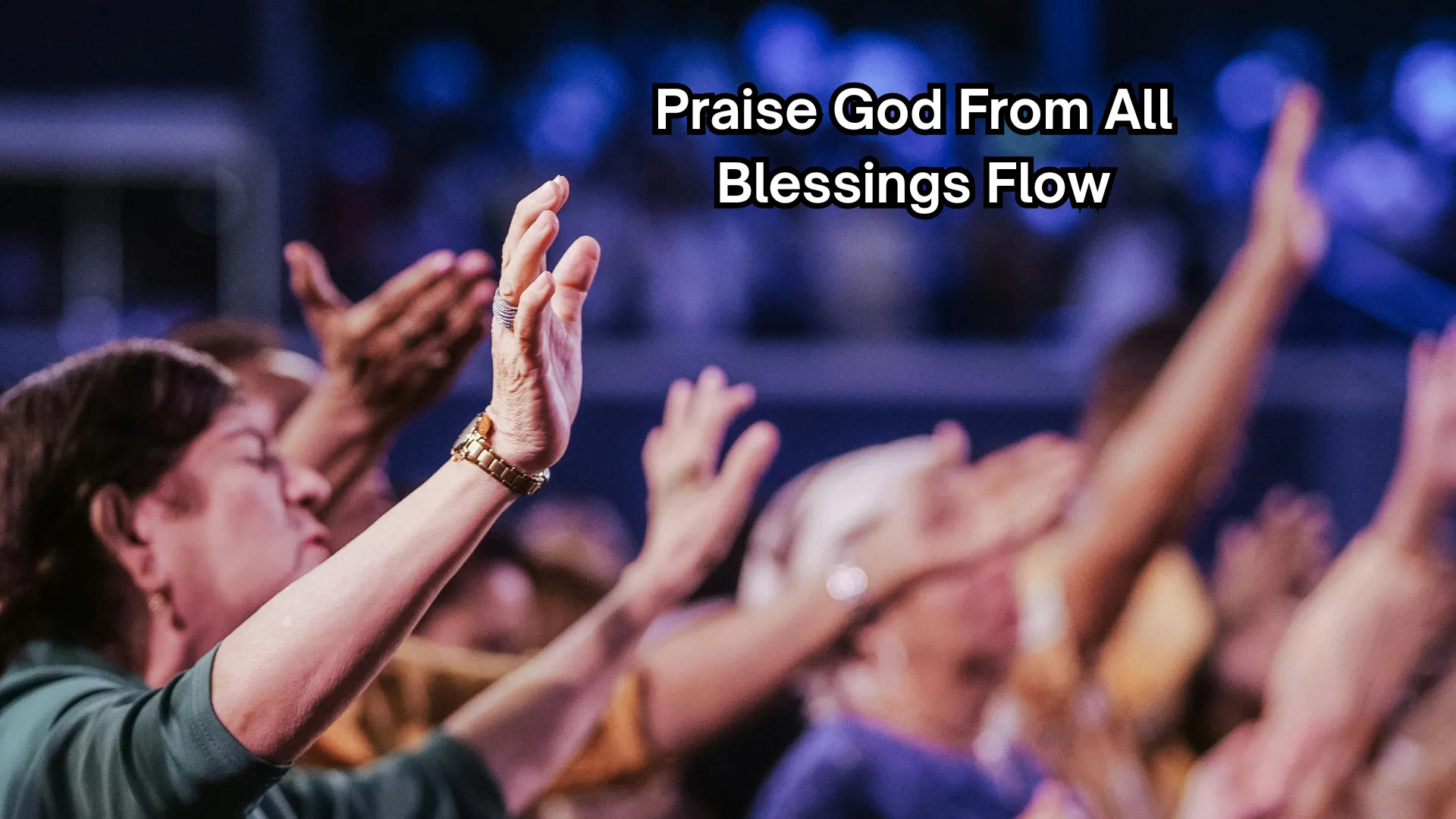
The words “praise god from all blessings flow” are closely associated with one of the most recognized expressions of praise in Christian worship: “Praise God, from whom all blessings flow.” Often called The Doxology, this short Christian hymn has been sung in churches, homes, schools, prayer gatherings, and Christian celebrations for generations.
Although the hymn contains only a few lines, its message is deeply meaningful. It reminds believers that every good thing ultimately comes from God and encourages all creation to respond with gratitude and worship.
People searching for Christian hymns Praise God from whom all blessings flow lyrics may be looking for the complete words of the hymn, its biblical meaning, or scriptures that communicate the same message.
This guide explores the lyrics, meaning, history, and Bible verses connected with this timeless hymn of praise.
Praise God From Whom All Blessings Flow Lyrics
The traditional words of the hymn are:
Praise God, from whom all blessings flow;
Praise Him, all creatures here below;
Praise Him above, ye heavenly host;
Praise Father, Son, and Holy Ghost.
Amen.
These simple words form what Christians commonly call The Doxology.
A doxology is a short expression of praise to God. It may be spoken, prayed, or sung during worship.
The Praise God from whom all blessings flow lyrics direct attention entirely toward God. Instead of focusing on personal requests or problems, the hymn simply acknowledges God’s goodness and calls creation to worship Him.
What Does “Praise God From Whom All Blessings Flow” Mean?
The phrase means that God is recognized as the ultimate source of every blessing.
Blessings are not limited to financial prosperity or material possessions. From a biblical perspective, blessings can include:
- Life and health
- Family and relationships
- Salvation and forgiveness
- Wisdom and guidance
- Provision
- Peace
- Strength during difficult times
- Opportunities
- Spiritual growth
- Hope for the future
When Christians sing the hymn Praise God from whom all blessings flow, they are acknowledging that everything they possess ultimately depends upon God’s grace and provision.
The hymn therefore becomes both an expression of worship and an attitude of gratitude.
Praise God From Whom All Blessings Flow Bible Verse
There is not one Bible verse containing the exact sentence “Praise God, from whom all blessings flow.” However, the idea behind the hymn is strongly connected to several biblical passages.
One of the clearest is James 1:17:
“Every good gift and every perfect gift is from above.”
This scripture closely reflects the message behind Praise God from whom all blessings flow.
Every good gift ultimately comes from God.
Another relevant passage is Psalm 103:1–2, where David encourages himself to praise God and remember His benefits.
The Bible repeatedly connects remembering God’s goodness with worship.
Scriptures Connected to Praise God From Whom All Blessings Flow
If you are looking for a scripture Praise God from whom all blessings flow connection, several passages express the same theme.
Psalm 150:6
“Let every thing that hath breath praise the Lord.”
This verse connects closely with the second line of the hymn:
Praise Him, all creatures here below.
The message is that worship is not limited to a small group of believers. Everything that has breath is invited to praise God.
Psalm 100:4
“Enter into his gates with thanksgiving, and into his courts with praise.”
Praise and thanksgiving are closely connected.
When believers recognize God’s blessings, gratitude naturally becomes worship.
1 Chronicles 29:11
David declares that greatness, power, glory, victory, and majesty belong to God.
This reflects the central attitude behind the hymn: God deserves praise because everything ultimately belongs to Him.
Ephesians 1:3
Paul praises God for blessing believers with spiritual blessings in Christ.
This reminds Christians that God’s blessings are not limited to material circumstances. Spiritual blessings such as salvation, grace, forgiveness, and relationship with God are even more significant.
Psalm 145:10
“All thy works shall praise thee, O Lord.”
This scripture again reflects the hymn’s invitation for all creation to worship its Creator.
The Story Behind the Hymn Praise God From Whom All Blessings Flow
The words commonly known as The Doxology are associated with English bishop and hymn writer Thomas Ken, who lived during the seventeenth century.
Ken wrote devotional hymns intended to encourage Christian worship and spiritual discipline.
The familiar four-line doxology eventually became widely used independently from the longer hymns with which it was associated.
Over time, churches from many Christian traditions began singing it during worship.
Its simplicity helped make it memorable.
Unlike hymns that tell a long story or explore a detailed theological subject, the hymn Praise God from whom all blessings flow lyrics communicate one central truth:
God deserves praise from all creation.
That simple message allowed the hymn to cross denominational, cultural, and generational boundaries.
Why Is Praise God From Whom All Blessings Flow Called the Doxology?
The word doxology comes from terms associated with glory and speech or expression.
In Christian worship, a doxology is essentially an expression of glory, honor, or praise directed toward God.
Many passages of Scripture contain doxological language.
The familiar song Praise God from whom all blessings flow is commonly called The Doxology because every line directs praise toward God.
There is no personal request.
There is no complaint.
There is no long theological explanation.
There is simply praise.
That is one reason the hymn remains powerful despite being extremely short.
Understanding Each Line of the Hymn
The Praise God from whom all blessings flow hymn lyrics become even more meaningful when each line is considered individually.
“Praise God, from whom all blessings flow”
The first line identifies God as the source of blessing.
It encourages believers to look beyond the blessing itself and remember the One who provided it.
Sometimes people become so focused on what they have received that they forget the giver.
The hymn redirects attention toward God.
“Praise Him, all creatures here below”
The second line expands the invitation.
Praise is not presented as something belonging only to pastors, worship leaders, or particularly religious people.
All creation is invited to worship.
This thought resembles Psalm 150, which concludes by calling everything with breath to praise the Lord.
“Praise Him above, ye heavenly host”
The third line moves from earth toward heaven.
The worship of God extends beyond human beings.
Scripture frequently describes heavenly beings worshiping God and declaring His holiness.
The hymn therefore presents a picture of worship extending throughout heaven and earth.
“Praise Father, Son, and Holy Ghost”
The final line expresses the Christian understanding of God as Father, Son, and Holy Spirit.
The hymn concludes by directing praise toward the Triune God.
Together, the four lines create a movement from God’s blessings to earthly worship, heavenly worship, and finally praise directed toward God Himself.
Why Christians Still Sing This Hymn Today
The Praise God from whom blessings flow hymn continues to be used because its message remains relevant.
Life constantly changes.
People experience success, disappointment, uncertainty, celebrations, losses, opportunities, and challenges.
Yet Christian worship is not supposed to depend entirely on circumstances.
The hymn reminds believers to recognize God’s goodness in every season.
It is commonly appropriate during:
- Sunday worship
- Thanksgiving services
- Prayer meetings
- Family devotions
- Weddings
- Christian celebrations
- Offering or giving
- Communion services
- Special church gatherings
- Personal prayer
Because the Praise God from whom all blessings flow lyric is short, many people can remember it without needing a hymn book or screen.
Praise God During Blessings and Difficult Seasons
It can feel natural to praise God when prayers have been answered.
Praise can become more difficult during uncertainty.
Yet biblical worship frequently occurs during both good and difficult circumstances.
Habakkuk 3 describes a situation in which expected agricultural provision disappears, yet the prophet still chooses to rejoice in God.
That does not mean Christians must pretend pain does not exist.
Instead, worship acknowledges that God’s character is greater than one particular circumstance.
The words “Praise God, from whom all blessings flow” can therefore become more than a celebration after receiving something.
They can become a declaration of trust.
Gratitude Changes the Focus of Prayer
Many prayers naturally begin with requests:
“Lord, please help me.”
“Lord, provide for me.”
“Lord, solve this problem.”
There is nothing wrong with bringing needs before God. Scripture encourages believers to pray about their concerns.
However, praise adds another dimension to prayer.
Instead of only asking what God can provide next, praise remembers what God has already done.
A simple prayer inspired by the hymn might be:
“Father, thank You for the blessings I sometimes overlook. Thank You for life, provision, relationships, forgiveness, hope, and every opportunity You have given me. Help me recognize Your goodness and live with gratitude. Amen.”
Praise God Praise God From Whom All Blessings Flow Lyrics and Worship
Repeating praise is common throughout Scripture and Christian worship.
Statements such as “Praise the Lord” appear repeatedly because worship is not merely about communicating new information.
Praise is about intentionally directing the heart toward God.
That is why phrases related to Praise God Praise God from whom all blessings flow lyrics continue to appear in Christian worship music and church services.
The original doxology’s message is simple enough to repeat yet profound enough to remain meaningful after generations of use.
Is “Praise God From All Blessings Flow” the Correct Wording?
People frequently search for praise God from all blessings flow, praise God from whom all blessing flow, or similar variations.
The traditional wording is:
“Praise God, from whom all blessings flow.”
The word “whom” is important because the phrase identifies God as the One from whom blessings originate.
However, search variations such as praise God from all blessings flow usually refer to the same well-known Christian hymn.
How to Use the Doxology in Personal Prayer
You do not have to be attending a church service to use this hymn.
It can become part of personal devotion.
For example, begin your morning by singing or speaking the Praise God from whom all blessings flow lyrics slowly.
After the first line, think about three blessings for which you are thankful.
After the second line, pray for your family, community, and the world.
After the third line, reflect on God’s greatness beyond what you can see.
After the final line, simply spend a moment worshiping God.
A hymn lasting less than a minute can therefore become the beginning of a meaningful time of prayer.
A Short Prayer Inspired by Praise God From Whom All Blessings Flow
Heavenly Father,
You are the source of every good gift.
Thank You for the blessings I recognize and even for those I often overlook.
Thank You for life, provision, protection, relationships, opportunities, grace, forgiveness, and hope.
Teach me not only to enjoy Your blessings but also to remember the One from whom they come.
Let my words, decisions, work, relationships, and daily life become expressions of gratitude.
May my heart continue to praise You during seasons of abundance and seasons of difficulty.
Together with all creation, I give praise and honor to You.
Amen.
Final Thoughts
Praise God from all blessings flow points toward one of the simplest and most important practices of Christian faith: gratitude.
The traditional words — “Praise God, from whom all blessings flow” — remind believers that blessings should direct attention back toward their source.
Whether you were searching for Praise God from whom all blessings flow lyrics, a Praise God from whom all blessings flow Bible verse, the history of the hymn, or its spiritual meaning, the message remains remarkably simple.
Recognize God’s goodness.
Remember His blessings.
Give thanks.
And let gratitude become praise.
The hymn may contain only a handful of words, but its message can shape an entire life of worship.
FAQs
The traditional lyrics are:
“Praise God, from whom all blessings flow;
Praise Him, all creatures here below;
Praise Him above, ye heavenly host;
Praise Father, Son, and Holy Ghost. Amen.”
This short hymn is widely known as The Doxology.
No. Praise God from whom all blessings flow is not an exact Bible verse. However, its message closely reflects scriptures such as James 1:17, which teaches that every good and perfect gift comes from above.
The words are traditionally associated with seventeenth-century English bishop and hymn writer Thomas Ken. The four-line ending became widely known as The Doxology and is now sung across many Christian traditions.
It means that God is acknowledged as the ultimate source of every good gift and blessing. The hymn encourages people on earth and the heavenly host to respond to God’s goodness with praise.
James 1:17 is one of the strongest biblical connections because it teaches that every good and perfect gift comes from above. Psalm 150:6, Psalm 100:4, Ephesians 1:3, and Psalm 145:10 also strongly reflect the hymn’s message.